

Nuclear Energy: Reactors, Plants, and Stocks
Economics, Engineering, and the Future of Fission

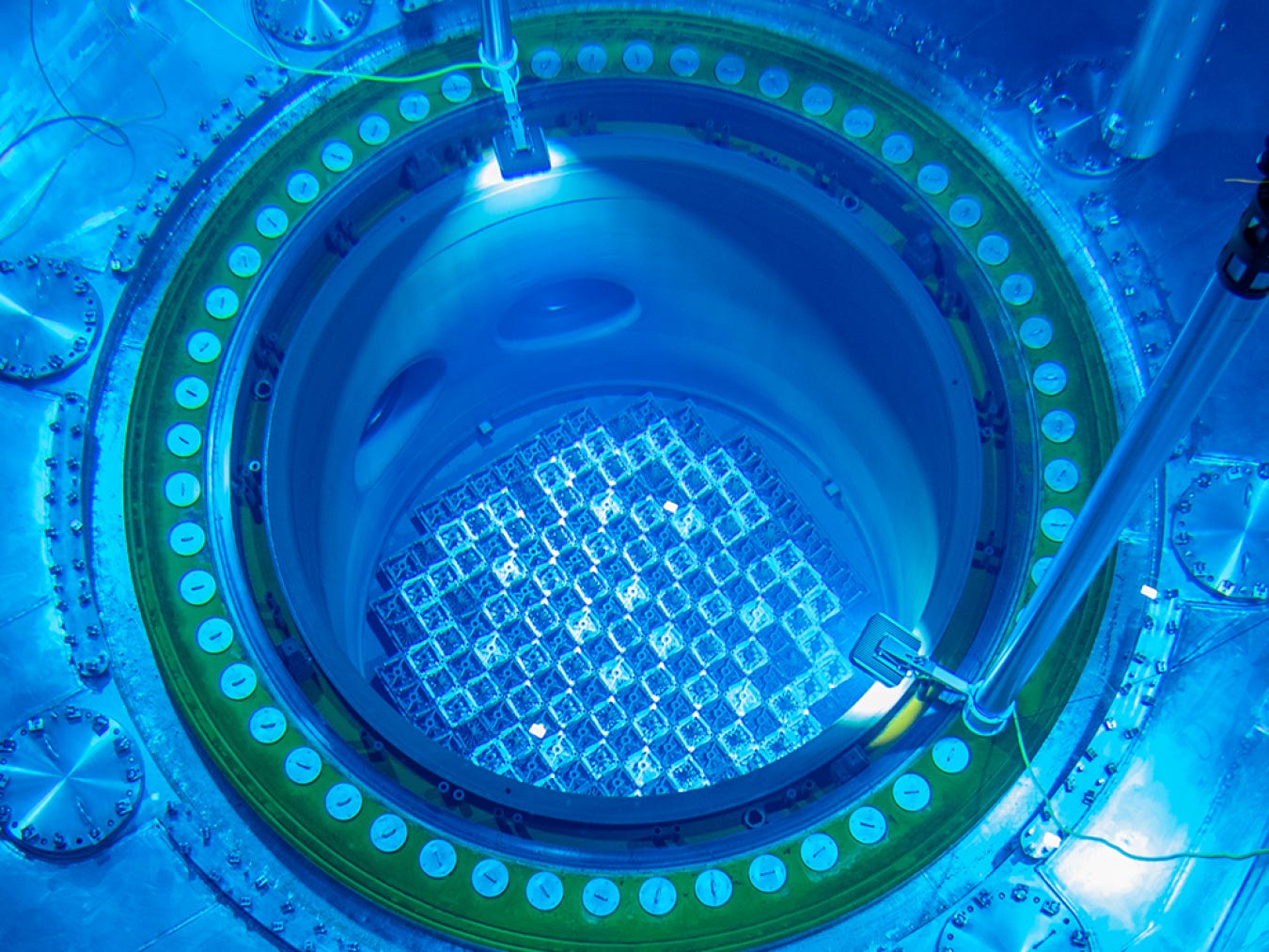
Nuclear fission is the process by which a heavy, fissile nucleus, typically Uranium-235 or Plutonium-239, is split into two lighter nuclei. The reaction is initiated when the nucleus is bombarded by subatomic particles, such as neutrons, creating an unstable state that forces the atom to divide. This split is highly energetic, releasing a combination of kinetic energy, gamma radiation, and radioactive fission products. Each fission event also frees several additional neutrons, which serve as the catalysts for a self-sustaining chain reaction.
The Energy Cycle: Front-End Operations
The lifecycle of nuclear fuel is a highly complex, multi-stage process that differs significantly from alternative energy sources. Unlike coal or natural gas, which can be burned almost immediately after extraction, uranium must undergo extensive physical and chemical processing before it can be used to generate energy. The cycle begins with the extraction of uranium ore, a market currently dominated by three nations: Kazakhstan, Canada, and Namibia.
There are two primary methods of extracting uranium: conventional mining and In-Situ Recovery (ISR). Conventional mining begins with the physical extraction of ore through two primary methods: open-pit or underground excavation. Open-pit mining is used when uranium deposits are relatively shallow, requiring the removal of surface soil and waste rock to reach the ore, while underground mining is employed for deeper or higher-grade deposits to access the ore with minimal surface disruption.
Once the ore is extracted, it is transported to a mill where it undergoes crushing and grinding, turning the rock into fine powder to increase the surface area for the chemical stages. Then, the powdered ore undergoes chemical leaching to separate the uranium from the rock. The material is typically treated with an acidic or alkaline solution, which dissolves the uranium oxides into a liquid state. This uranium-rich solution is then filtered and purified by ion exchange or solvent extraction, followed by precipitation and drying. The final product of this conventional process is a concentrated uranium oxide powder known as yellowcake, which serves as the primary feedstock for the next stages of the nuclear fuel cycle, including conversion and enrichment. The conventional mining method is often used for deposits of exceedingly high grade.
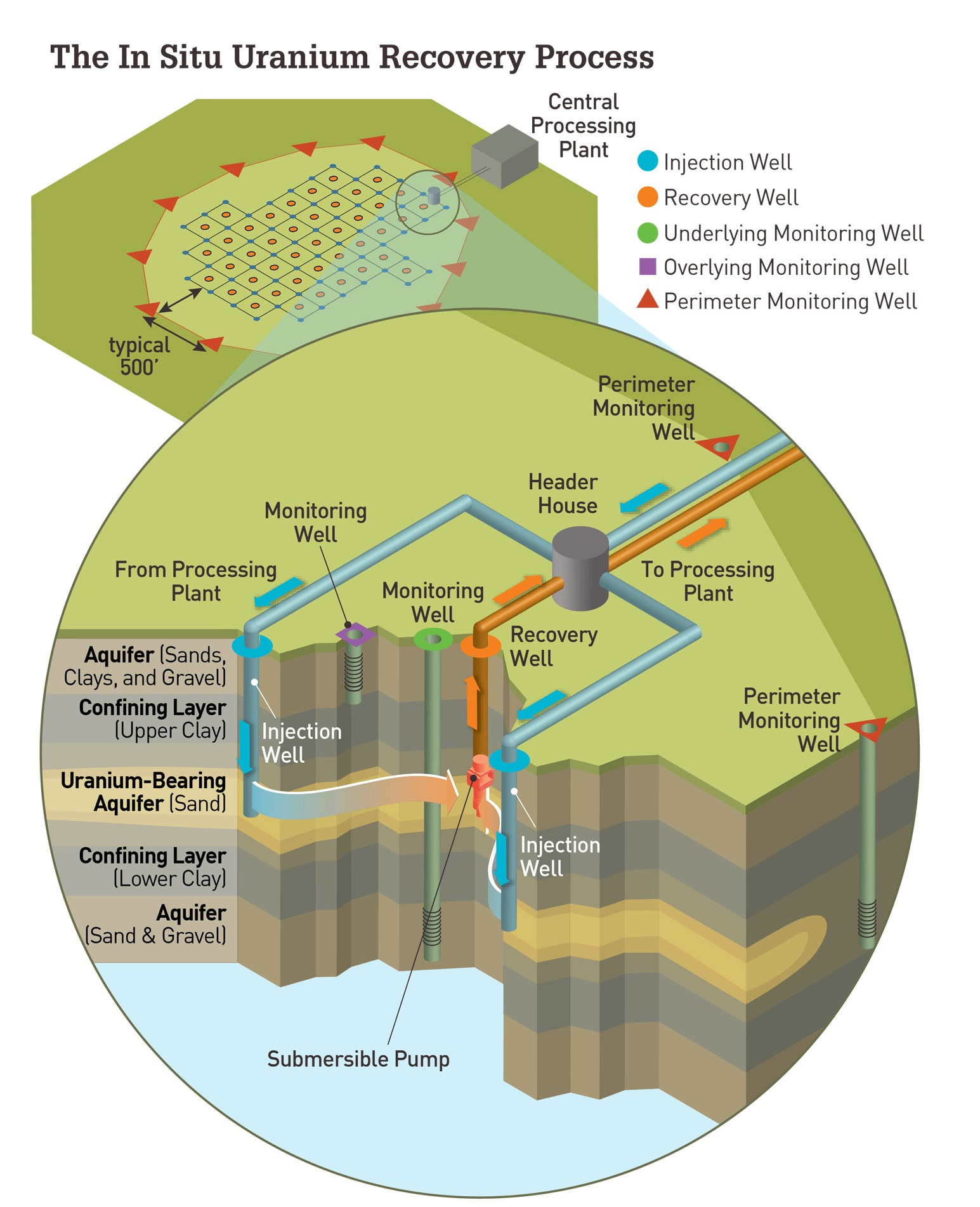
The In-Situ Recovery (ISR) method currently accounts for more than half of global uranium production. Rather than physically removing rock, ISR operators drill a network of injection and recovery wells into permeable, uranium-bearing groundwater aquifers. A chemical solution, known as a lixiviant, is pumped underground to dissolve the uranium in situ. The resulting uranium-rich solution is then pumped back to the surface and processed through ion-exchange resins to extract the mineral. Because it avoids large-scale excavation, the ISR method is generally more cost-effective, requires a minimal surface footprint, and produces no traditional waste rock or tailings.
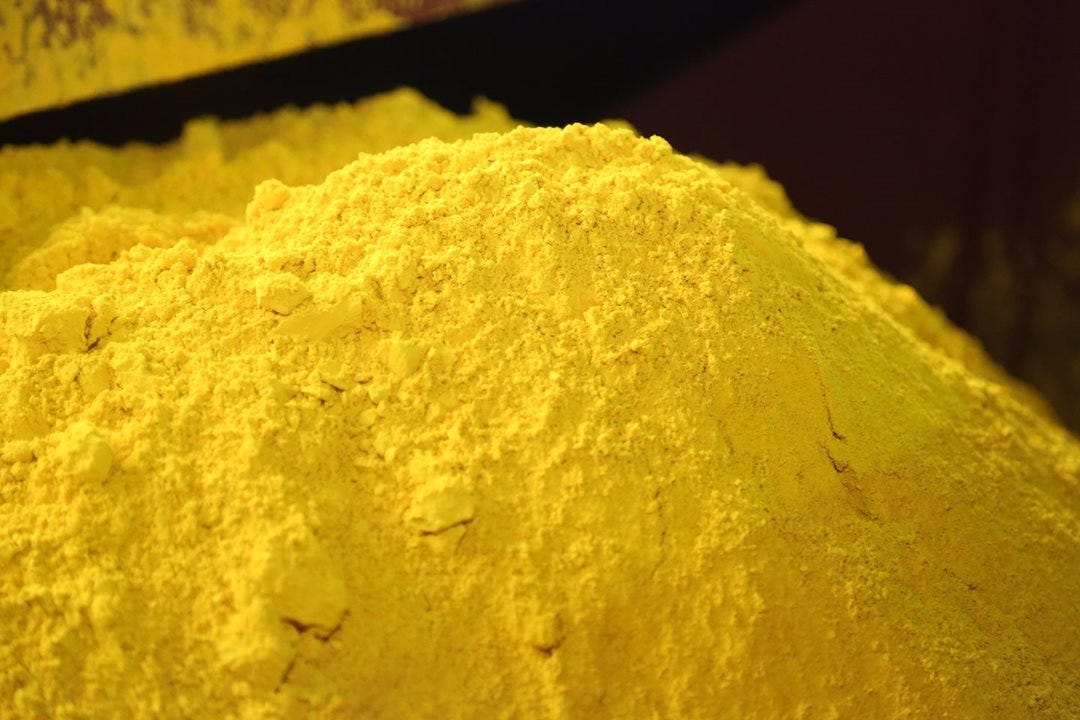
Following extraction, both conventional ore and ISR solutions are processed at a milling facility through a series of precipitation, filtration, and drying steps. These steps purify the uranium and concentrate it into triuranium octoxide (U3O8). This powdered material, known as yellowcake, serves as the primary tradable commodity in the global uranium market. However, current commercial enrichment technologies require uranium in a gaseous state, so yellowcake cannot be enriched directly. This requires a conversion stage in which U3O8 is transported to specialized chemical facilities and reacted with anhydrous hydrofluoric acid and fluorine gas, yielding uranium hexafluoride (UF6).
While the chemistry of this process is straightforward, the execution is highly complex. It requires handling Fluorine (F2), the most reactive element on the periodic table, and Hydrogen Fluoride (HF). These substances are highly corrosive and can "eat" almost anything they come into contact with, including most metals; consequently, standard pipes or tanks cannot be used. Additionally, the reaction releases a large amount of energy, which requires precise cooling systems to manage safely. Once the conversion is complete, the UF6 is cooled back into a solid state and packed into heavily regulated, standardized steel cylinders for transport to enrichment facilities. UF6 is specifically chosen for this process because it sublimates at the relatively moderate temperature of 56°C.
Modern commercial enrichment relies entirely on gas centrifuge technology, which is significantly more energy-efficient than the gaseous diffusion methods utilized until 2012/2013. Inside an enrichment plant, heated $UF_6$ gas is fed into tall cylindrical rotors—constructed from high-strength carbon fiber or specialized alloys—that spin at extreme speeds. Natural uranium consists primarily of two isotopes: roughly 99.3% Uranium-238 (U-238) and 0.7% Uranium-235 (U-235). The centrifugal forces generated by the rotation push the heavier U-238 isotopes toward the outer wall of the cylinder, while the lighter U-235 isotopes remain concentrated near the central axis. This separation process is repeated thousands of times across a linked series of centrifuges, known as a cascade, to incrementally increase the concentration of U-235.
The degree of uranium enrichment depends strictly on the reactor design it will fuel. The majority of the world’s currently operating commercial fleet is Light Water Reactors (LWRs), which require Low-Enriched Uranium (LEU), defined as a U-235 concentration of 3% to 5%. However, the next generation of advanced nuclear designs, including Small Modular Reactors (SMRs), requires a denser fuel source to achieve higher power outputs within a smaller physical footprint. These advanced designs rely on High-Assay, Low-Enriched Uranium (HALEU), which contains a U-235 concentration of 5% to 19.75%. Enriching uranium beyond the 20% threshold categorizes the material as Highly Enriched Uranium (HEU), which is primarily restricted to naval propulsion and weapons-grade applications.
The final stage of the front-end cycle is fuel fabrication, the transformation of UF6 gas into physical, reactor-ready hardware. Upon arriving at a fabrication plant, the enriched UF6 undergoes “deconversion,” an industrial process that converts the gas back into a stable, black uranium dioxide (UO2) powder. This powder is compressed into small cylindrical ceramic pellets, each roughly the size of a fingertip. The pellets are then baked, or sintered, at temperatures exceeding 1,700°C to achieve optimal structural density and durability. From an energy density perspective, a single ceramic pellet is equivalent to approximately one ton of coal.
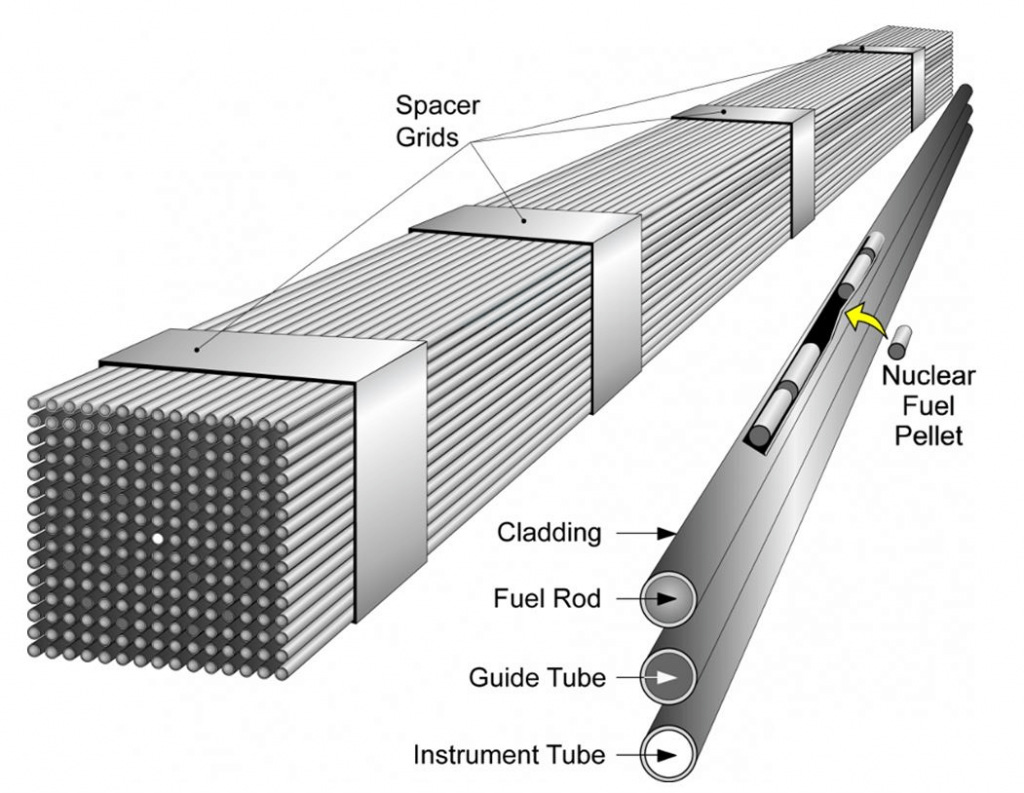
Once sintered, these pellets are stacked and hermetically sealed inside long, thin metal tubes, typically forged from highly corrosion-resistant zirconium alloys. These individual fuel rods are then structurally bundled into larger fuel assemblies, utilizing specialized spacer grids and guide tubes to optimize coolant flow. Depending on the reactor type, a typical fuel assembly contains between 179 and 264 individual fuel rods, which are rigorously tested before being shipped to nuclear utility sites.
The Energy Cycle: Back End-Operations
Once nuclear fuel reaches a point where its efficiency drops or the reactor’s operational limits are reached, the spent fuel assembly is removed from the core. This Spent Nuclear Fuel (SNF) remains highly radioactive and generates significant decay heat even after the fission chain reaction has ceased. To manage this thermal and radioactive output, the fuel is submerged in a spent-fuel pool at the reactor site. These pools, typically 40 feet deep and constructed of steel-lined concrete, utilize continuously circulating water to cool the assemblies and provide a critical radiation shield.
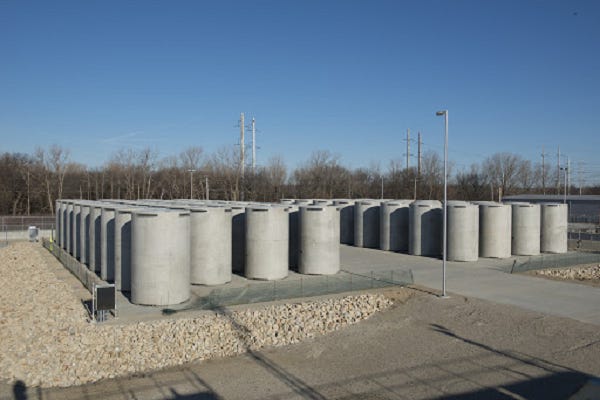
Spent fuel generally remains in these pools for at least five years as its heat and radioactivity levels dissipate. Once sufficiently cooled, it is typically transferred into dry cask storage systems for long-term management. Dry casks are heavy, welded stainless steel cylinders filled with an inert gas, such as helium, to prevent corrosion and facilitate heat transfer. These steel canisters are then encased in concrete or steel overpacks that provide structural protection and further radiation shielding. These systems rely entirely on passive natural air circulation for cooling and are engineered to withstand extreme natural disasters, including high-magnitude earthquakes and tornadoes.
While interim dry cask storage is secure, the industry consensus is that deep geological disposal is the only viable long-term solution for isolating high-level radioactive waste. This is necessary because spent fuel contains elements like Plutonium-239 (PU-239), which has a half-life of over 24,000 years, and Iodine-129 (I-129), necessitating containment structures that can isolate the material from the biosphere for up to one million years. Deep Geological Repositories (DGRs) involve packaging nuclear waste in highly engineered, corrosion-resistant canisters and burying them in stable rock formations at depths of 250 to 1,000 meters. These sites are selected based on their tectonic stability and low groundwater permeability to ensure the waste remains geologically contained.
Inside the Nuclear Power Plant
When a neutron strikes a U-235 atom, the nucleus absorbs the neutron, becomes unstable, and divides into two smaller atoms of different elements. This split releases a massive amount of thermal energy, gamma radiation, and the ejection of additional neutrons. These neutrons then collide with surrounding U-235 atoms, initiating a self-sustaining chain reaction.
A common misconception is that a nuclear power plant uses radiation itself to produce electricity. In reality, the facility operates by harnessing the intense thermal energy produced by these continuous fission reactions. This heat is transferred to a liquid coolant, typically water, which is then used to generate high-pressure steam. This steam is directed through a series of turbines, which spin at high velocity. The spinning turbines are coupled to a generator that converts mechanical kinetic energy into electrical power for dispatch to the grid. After passing through the turbine blades, the steam is cooled and recondensed into liquid water, then cycled back into the system for continuous reuse in a closed loop.
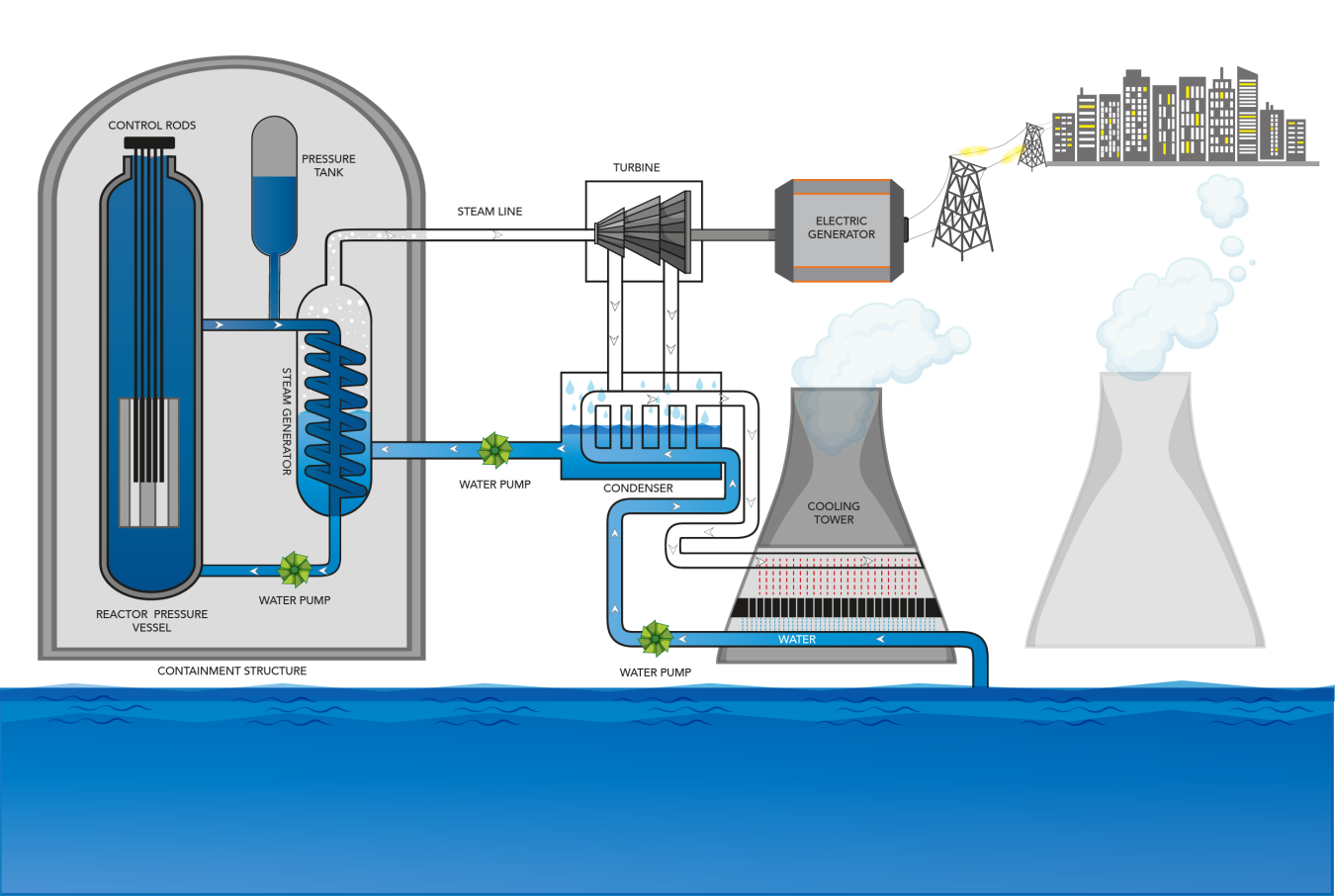
A nuclear power plant is divided into two major structural and operational sections: The Nuclear Steam Supply System (NSSS), often referred to as the nuclear island, and the Balance-of-Plant (BOP), which constitutes the conventional generating island. The NSSS is responsible for generating, managing, and containing the thermal energy produced by nuclear fission. The BOP handles the plant’s thermodynamics, energy conversion, power delivery to the grid, and heat rejection, which means safely disposing of energy that can’t be converted into electricity.
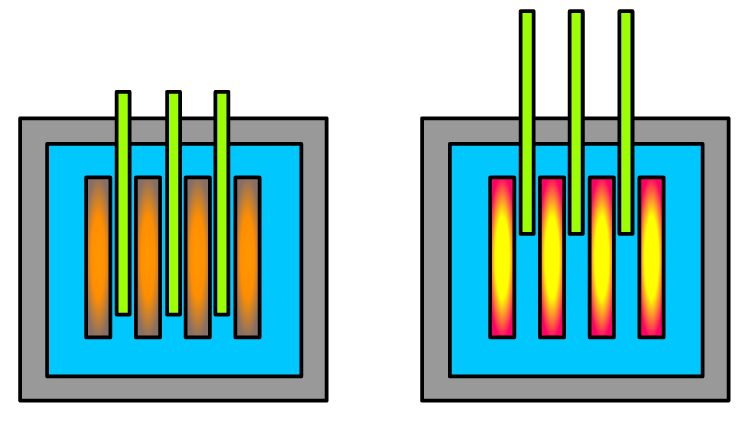
The heart of the Nuclear Steam Supply System (NSSS) is the reactor core. Plant operators actively manage the rate of the fission reaction within the fuel assemblies using two primary components: the moderator and the control rods. A moderator, most commonly water or graphite, is used to slow down fast-moving neutrons. This is critical because the faster a neutron moves, the lower the probability it will successfully strike a U-235 atom and induce fission; slowing them to “thermal” speeds significantly increases the likelihood of sustaining the chain reaction. In contrast, control rods are fabricated from high-strength, neutron-absorbing materials such as boron, cadmium, silver, or hafnium. These rods are distributed among the fuel assemblies to regulate power output. By raising the control rods, operators allow more neutrons to reach the fuel, increasing the reaction rate and generating more heat. Conversely, lowering the rods absorbs more neutrons, effectively “braking” the reaction.
The entire reactor core is encased within the Reactor Vessel (RV), the largest and most complex component of the system. The RV serves as a safety-critical pressure boundary, engineered to withstand extreme temperatures and operational conditions. To provide an ultimate barrier against radioactive release, the RV and primary coolant systems are enclosed within a containment structure. This building is typically constructed from thick, steel-reinforced concrete designed to confine airborne radioactive emissions in the event of a structural failure or accident. Beyond containment, the shell also serves as a robust shield, protecting the internal nuclear reactor vessel from external events and natural disasters.
To extract thermal energy from the reactor core, a primary coolant (typically light water) is continuously circulated through the fuel assemblies. This primary loop is maintained under extreme pressure to ensure the water remains in a liquid state even at peak temperatures. This heated water is then pumped through a steam generator, which acts as a thermal bridge, transferring energy to a physically isolated secondary loop. A pressurizer regulates the primary circuit’s internal pressure to prevent boiling and maintain stable heat transfer. In this secondary loop, the absorbed heat causes the water to vaporize; This resulting high-pressure steam is directed out of the nuclear island and into the conventional generating block to spin the turbines.
The BOP transforms the thermal energy delivered by the secondary loop into dispatchable electricity. The steam travels through pipes to spin a series of turbine blades, which provide mechanical rotation to an attached electric generator. Once the steam has exhausted its kinetic energy, it enters a large condenser, where it is cooled back into a liquid state. This condensed feedwater is then pumped back to the steam generator for reheating, effectively completing the closed secondary loop. Finally, the electrical output is routed through transformers to step up the voltage for efficient grid transmission.
Global Fleet and Reactor Technology
According to the International Atomic Energy Agency (IAEA), 413 commercial nuclear reactors are currently operating across 31 countries, providing approximately 377 gigawatts (GW) of net electrical capacity. This global fleet accounts for between 9% and 11% of total global electricity generation. The United States maintains the largest nuclear fleet, with 93 reactors and roughly 96 GW of capacity, accounting for approximately 20% of U.S. total electricity generation. The two other largest fleets are in China, with 58 reactors and 56 GW of capacity, and in France, with 57 and 63 GW of capacity.
Light Water Reactors (LWRs) are the standard for modern commercial nuclear energy, accounting for approximately 90% of the world’s operating reactors. LWRs utilize two primary configurations: Pressurized Water Reactors (PWRs), which represent 78% of the global fleet, and Boiling Water Reactors (BWRs), which account for roughly 12%. The primary difference between PWRs and BWRs is whether the water is allowed to boil in the reactor core. A PWR relies on two water loops, while the BWR operates on a single-loop system where the water boils directly in the core. A single-loop system is simpler and more efficient to build, but it results in higher radioactivity during operations, requiring more shielding and stricter maintenance protocols. Traditional large-scale LWRs typically provide 1,000 Megawatts (MW) or more of nameplate electrical capacity and are fundamentally designed to capture economies of scale. However, they are extremely costly to build, and construction schedules often span six to ten years per plant.
While the current global nuclear fleet is primarily composed of large-scale water-cooled Generation II and III reactors, the industry is undergoing a significant technological transformation. Generation II reactors rely on “active systems,” such as electric pumps and diesel generators, to circulate coolant and prevent overheating during extreme events. In contrast, Generation III and III+ designs utilize passive safety systems that leverage physical principles, such as gravity-fed water tanks and natural convection, to cool the core without requiring operator intervention or external power. Furthermore, a new generation of reactors, Generation IV, is emerging; these designs utilize novel cooling processes involving gases, liquid metals, molten salts, and, in some cases, supercritical water to achieve higher efficiencies and expanded industrial applications.
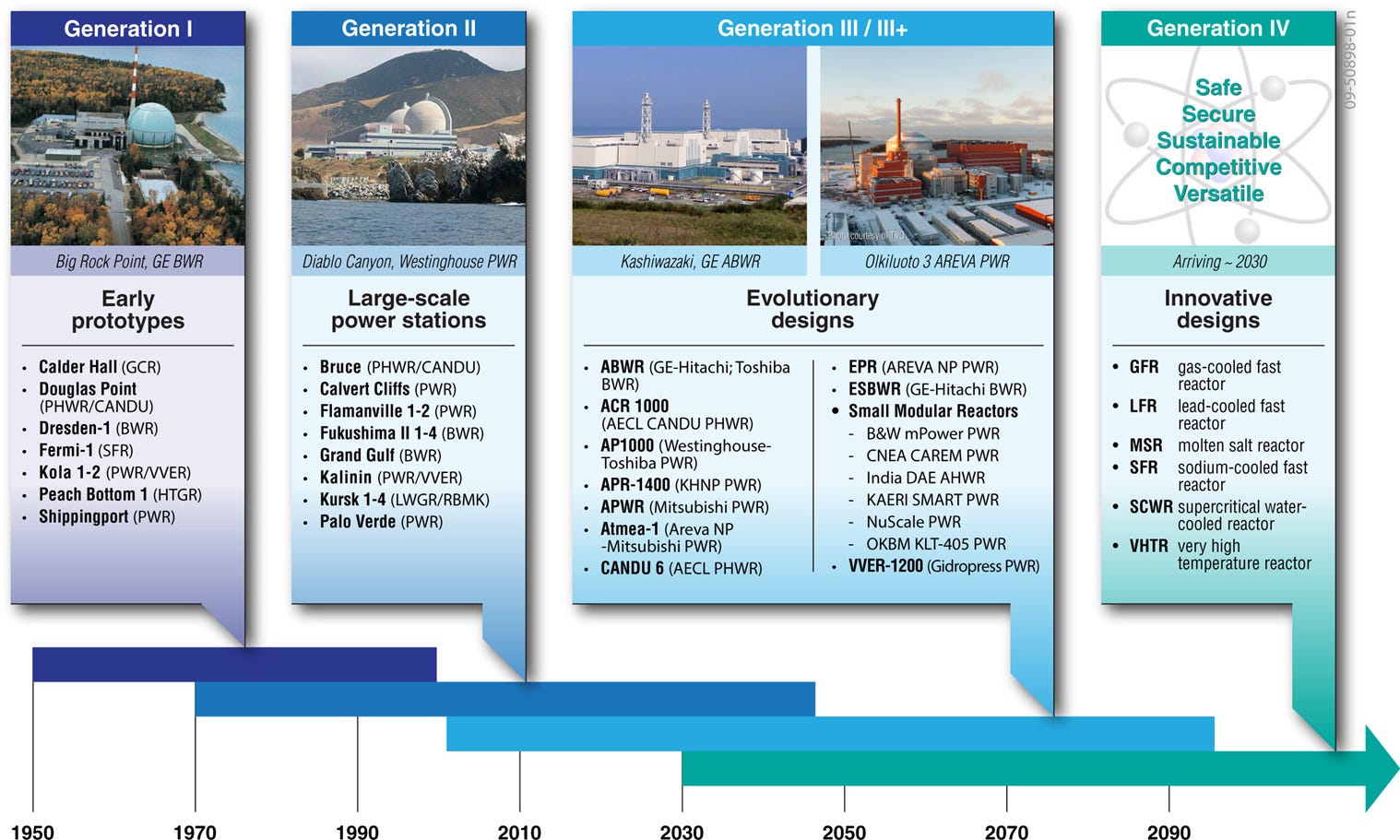
Generation III reactors have been in commercial operation since the 1990s, while Generation IV reactors are still largely in prototype and demonstration phases, with commercialization targeted for the 2030s to 2040s. However, the technology has officially entered commercial operation. China has had Gen IV reactors in operation since December 2023, and the U.S., trying to catch up, is expected to test them in 2026. Moreover, China is leading the nuclear race with 37 new reactors under construction expected to add 39 GW of new electrical capacity, while the U.S. has no new reactors under construction.
In addition to Gen IV reactors, Small Modular Reactors (SMRs) and Micro Reactors are rising in popularity. These alternative solutions generate up to 300 MW of electricity while being 100 to 1,000 times smaller than conventional nuclear plants, which allows them to be factory-fabricated and shipped by truck, plane, or railcar for rapid deployment.
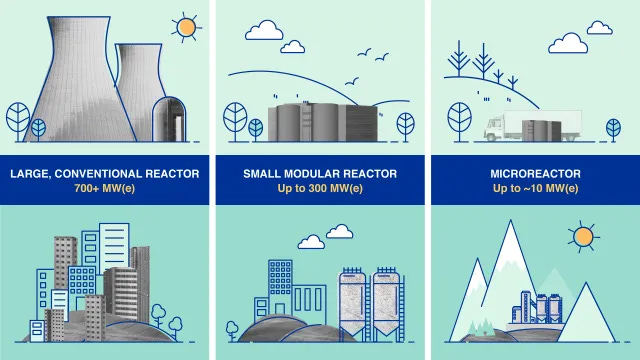
These solutions offer a significantly smaller physical footprint, allowing them to be deployed closer to dense demand centers or directly at the sites of retiring coal plants, leveraging existing grid infrastructure. While traditional large nuclear plants are optimized primarily for large-scale baseload grid power, SMRs are considered more versatile; they are increasingly targeted for “behind-the-meter” applications such as powering AI data centers, providing high-temperature process heat for industrial plants, or serving as a direct replacement for fossil-fuel capacity. Meanwhile, microreactors serve as an even more specialized solution, designed for high-mobility or extreme environments, such as space and maritime propulsion, remote mining operations, and disaster relief, where traditional energy infrastructure is either nonexistent or physically impossible to construct.
Economics of a Nuclear Power Plant: Construction
Nuclear power plants are high-capital-intensity projects that require extensive site preparation, complex engineering, and specialized component manufacturing. The process in the U.S. involves a licensing phase that can take 5 years and is governed by the U.S. Nuclear Regulatory Commission 10 CFR Part 52 framework, during which a utility must secure approval for both a specific site and a certified reactor design through safety reviews, environmental impact analyses, and operational analysis reports. Once a Combined License (COL) is granted, the physical construction phase begins, which the Nuclear Energy Agency (NEA) estimates takes an additional five to seven years for full-scale plants. Throughout this period, regulators maintain continuous oversight via ITAAC (Inspections, Tests, Analysis, and Acceptance Criteria) to ensure the build strictly adheres to the approved design. Then, when construction is completed, the plant is fully verified and tested to deliver power to the grid.
The economics of a nuclear power plant differ fundamentally from those of fossil-fuel alternatives due to its massive, front-loaded capital intensity. While the financial viability of a natural gas facility is primarily driven by long-term fuel procurement and price volatility, the economic profile of a nuclear plant is largely established before it generates its first megawatt. Upfront capital expenditures related to site preparation, licensing, engineering, component manufacturing, and construction typically account for 70% to 80% of a nuclear power plant’s total lifecycle costs.
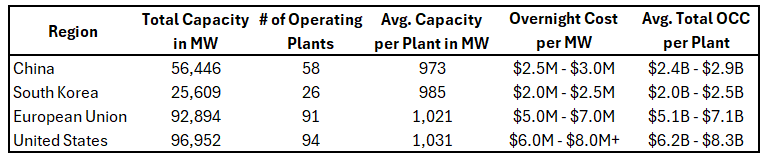
The metric for evaluating nuclear capital expenditures is the Overnight Construction Cost (OCC), which represents the theoretical total cost of building the plant as if it were constructed instantly, excluding financing costs, and isolating the core material and labor costs. About 80% of OCC is related to engineering, procurement, and construction expenses, while the remaining 20% consists of system testing, plant commissioning, and operator training expenses. Based on data from the World Nuclear Association (WNA) and the OECD Nuclear Agency (NEA), the average overnight costs typically fall into the following ranges:
While Overnight Capital Cost (OCC) captures the physical cost of the plant, the true financial burden of a nuclear project is largely defined by Interest During Construction (IDC), the interest accrued on capital borrowed to finance the build. Because large-scale nuclear facilities typically take between five and ten years to complete, these projects carry significant debt for an extended period, during which they generate no cash flow. Consequently, IDC accounts for 16% to 33% of a plant's total cost, depending on the duration of the construction schedule.
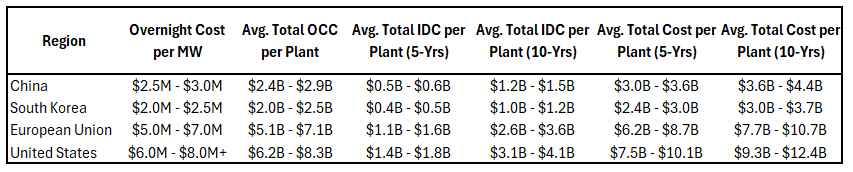
Historically, nuclear power plant construction has been hampered by regulatory-driven delays that significantly increase IDC. A 2025 study by the Boston University Institute for Global Sustainability found that the average nuclear power plant experiences a construction cost overrun of 102.5%, ultimately costing $1.56 billion more than projected and taking an average of two years longer than expected to complete. For example, the Vogtle Plant Units 3 and 4 expansion in Georgia, originally projected to take 7 years and cost $14 billion, was completed in 15 years and cost $35 billion.
Economics of a Nuclear Power Plant: Operations
The operational economic profile of a nuclear plant is primarily weighted toward fixed costs, a significant contrast from fossil-fuel plants, where variable fuel prices drive operating profitability. Fixed O&M costs consist primarily of labor, materials, contract services, and administrative expenses. According to the World Nuclear Association’s Nuclear Power Economics and Structuring (2024 Edition), O&M costs account for approximately 72% of total operating costs, while fuel accounts for roughly 28%.
The primary recurring cost in day-to-day operations is labor. It is a “people-heavy” operation due to the complex regulatory and safety environment. Plant personnel are highly skilled and must undergo rigorous vetting processes to gain site access, including extensive reviews of employment, military, criminal, and credit histories, as well as mandatory drug, alcohol, and psychological screenings. Furthermore, specialized personnel, such as control room operators, must maintain active licenses issued by the Nuclear Regulatory Commission (NRC). The staffing requirements reflect this operational complexity: while a natural gas facility might require fewer than 100 employees to operate, a similarly sized nuclear plant requires roughly 600 people.
Regulatory compliance fees represent an additional fixed operational cost. The Nuclear Regulatory Commission (NRC) mandates an annual fee of approximately $5.7 million for each operating reactor. Furthermore, the NRC requires all operators to maintain 24/7 armed and trained security forces. Consequently, security budgets must account for continuous surveillance, perimeter controls, physical barriers, intrusion detection systems, and site access control equipment. Liability and property insurance are also mandated by federal law. Nuclear plant operators are required to purchase the maximum available off-site liability coverage; currently, each reactor carries a contingent obligation for retrospective premiums of approximately $166 million per accident, with annual payments capped at $25 million. Beyond third-party liability, operators must insure the plant’s physical assets. The Nuclear Regulatory Commission (NRC) requires a minimum of $1 billion in on-site property damage insurance. These funds are specifically earmarked to ensure that, in the event of an incident, sufficient capital is available to stabilize the reactor and decontaminate the site.
Variable O&M costs represent a smaller fraction of a nuclear plant’s economic profile, as they fluctuate directly with the volume of electricity generated. Unlike in fossil-fuel generation, these expenses exclude major fuel purchases; instead, they primarily cover continuous water consumption, wastewater discharge management, and the procurement of specialized chemicals for coolant chemistry and corrosion control. The most financially sensitive and labor-intensive periods in a nuclear plant’s lifecycle are its scheduled refueling and maintenance outages. Because the reactor core must be physically opened to replenish depleted uranium, the entire generating unit must be taken completely offline. These events are typically scheduled to occur every 18 to 24 months.
During a standard outage, operators replace approximately one-third of the reactor’s fuel assemblies with fresh uranium bundles. Simultaneously, plant personnel perform preventive and corrective maintenance, mandatory equipment inspections, and system upgrades that cannot be performed while the reactor is in a critical state, i.e., operating at full power.
Economics of a Nuclear Power Plant: Decommissioning
The eventual retirement, dismantling, and decontamination of a nuclear plant typically occur after 60 to 80 years of operation. During this stage, operators must recognize a financial liability known as an Asset Retirement Obligation (ARO), which reflects the estimated costs of decommissioning the reactor, managing radioactive waste, and restoring the site to safe conditions. Utilities determine the initial fair value of an ARO by calculating the PV of projected future cash flows using a credit-adjusted, risk-free discount rate. Upon initial recognition of the liability, an offsetting asset is capitalized. Over the plant’s operating life, this capitalized asset is depreciated, while the ARO liability is accreted to its estimated future settlement value.
To ensure that taxpayers do not ultimately bear the financial burden of decommissioning, the NRC requires operators to demonstrate financial assurance by establishing and maintaining Nuclear Decommissioning Trust (NDT) funds. These external accounts are funded systematically through surcharges collected from electricity ratepayers throughout the plant’s operational life. The capital is managed by third-party investment firms and held in diversified portfolios designed to outpace inflation and meet long-term obligations.
The Opportunity: AI, SMRs, and Energy Independence
Global nuclear power is transitioning after a period of stagnation, driven by decarbonization mandates, energy security concerns, and rising electricity consumption. Currently, 413 commercial nuclear reactors are operational, providing approximately 377 GW of net electrical capacity. An additional 78 reactors are under construction globally, which are projected to increase total capacity to 462 GW over the next two decades. Furthermore, 122 reactors are in the planning stages but have not yet broken ground; these additions would bring the total fleet to 613 units with a combined capacity of 570 GW. Finally, approximately 309 reactors have been proposed, which, if fully realized, would increase the total fleet to 922 units and capacity to 856 GW. About 35 countries are constructing, planning, or considering nuclear power projects. The vast majority of reactors under construction are in China, followed by India, Russia, and Turkiye. On average, these 78 reactors are expected to be completed between 2033 and 2038, assuming no significant delays.
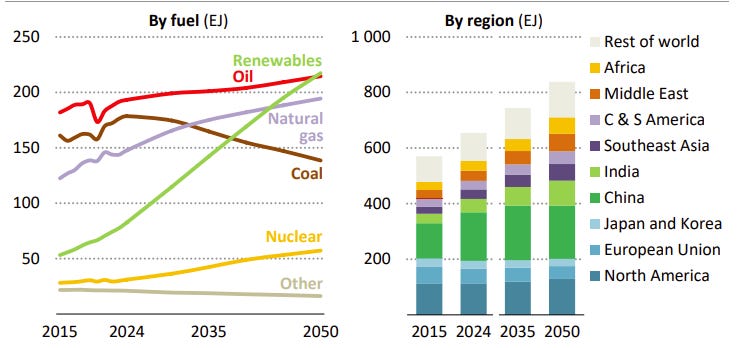
According to the International Energy Agency’s (IEA) World Energy Outlook 2025, the global energy landscape is undergoing a fundamental shift, characterized by the rapid scale-up of renewables and a pivot away from coal. By 2050, renewables are projected to become the world’s dominant energy source, surpassing oil and natural gas. While coal consumption is forecast to decline sharply after 2024, nuclear energy is expected to see a steady, modest increase to support baseload power requirements. This transition is set against a backdrop of rising global energy demand, driven primarily by significant economic expansion in India, China, Southeast Asia, and Africa. In contrast, demand in developed regions, such as North America and the European Union, is expected to remain relatively stable through 2050.
Artificial intelligence and hyperscale data centers have introduced another driver for electricity demand. Data center power demand is projected to increase by more than 160% by 2030 compared to 2024. Because AI and machine learning systems consume up to 10 times as much power as traditional computing tasks, technology companies require significant, uninterrupted power to run their AI models. Nuclear energy is uniquely positioned to benefit from that, given its reliability and 24/7 baseload generation profile. Microsoft recently initiated a 20-year power purchase agreement with Constellation to restart a 835 MW nuclear facility in Pennsylvania. Amazon committed $500 million alongside Dominion Energy and X-Energy to explore SMRs in Virginia. Meta signed nuclear deals with Vistra, TerraPower, and Oklo to power its AI supercluster. And Google reached an agreement with Kairos Power to deploy 500 MW by 2035.
While large-scale power plants still make up the vast majority of the current global fleet, the industry is slowly shifting to SMRs, which require significantly lower upfront capital costs, offer scalable modular assembly, and feature advanced safety systems. The global SMR market is projected to reach $1 trillion by 2025, with over 75 new SMR designs proposed worldwide in the last few years. These advanced reactors utilize HALEU and operate on longer refueling cycles, and their development will directly drive global uranium consumption over the next two to three decades.
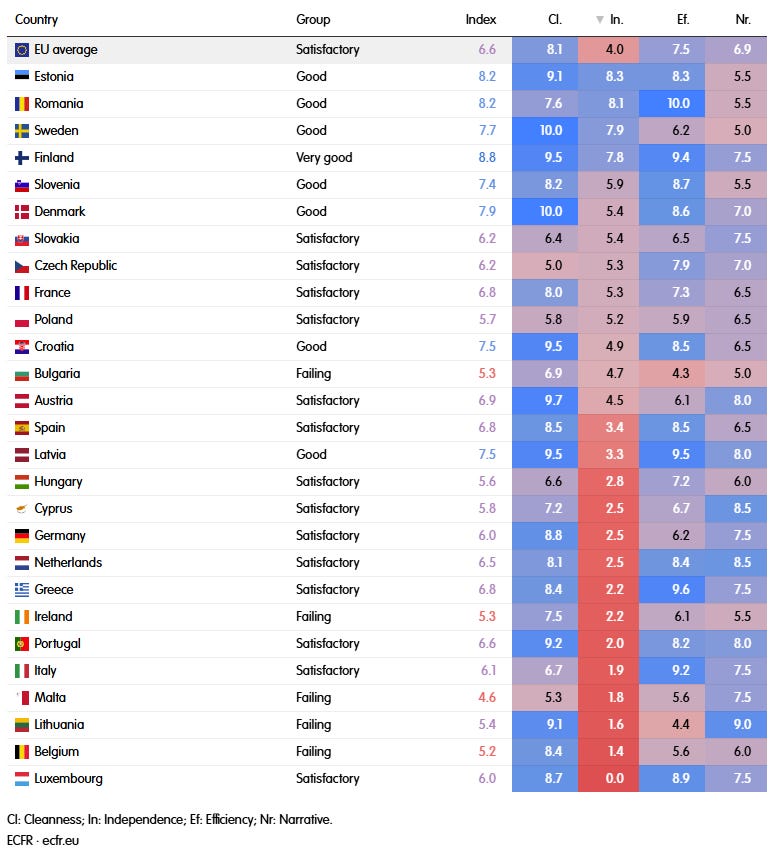
Energy security is another driving force behind this shift. Geopolitical shocks, such as the invasion of Ukraine, the suspension of uranium mining in Niger, and conflicts in the Middle East, have forced nations to reassess the risks of relying on imported energy and foreign supply chains. The U.S. government has positioned nuclear energy as a cornerstone of its national security strategy, passing bipartisan legislation, including the Accelerating Deployment of Versatile, Advanced Nuclear for Clean Energy (ADVANCE) Act of 2024, to expedite licensing and the Inflation Reduction Act (IRA), which provides production tax credits. More recently, executive actions have reinforced the objective of increasing U.S. nuclear capacity to 400 GW by 2050. This aligns with international momentum from the COP28 and COP30 summits, where 30 countries pledged to triple global nuclear capacity by 2050.
If all reactors under construction, planned, and proposed are completed and operational on schedule by 2050, approximately 922 commercial nuclear reactors will be in operation with 856 GW of capacity. This represents a 2.27x increase and creates significant opportunities for companies exposed to this transformation. The initial goal is to learn the fundamentals of the nuclear industry and reactor mechanics, which will enable an informed analysis of companies positioned to benefit from this long-term structural shift.
The Opportunity: Uranium Mining and Fuel Cycle Providers
Energy Fuels Inc (NYSEAMERICAN: UUUU)
Uranium Energy Corp (NYSEAMERICAN: UEC)
enCore Energy Corp (NASDAQ: EU)
The Opportunity: Conversion and Enrichment
Honeywell International Inc (NASDAQ: HON)
Centrus Energy Corp (NYSE: LEU)
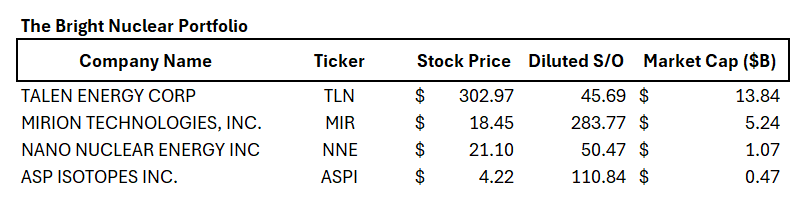
ASP Isotopes Inc (NASDAQ: ASPI)
Lightbridge Corp (NASDAQ: LTBR)
The Opportunity: Reactors and OEMs
Nano Nuclear Energy Inc (NASDAQ: NNE)
Nuscale Power Corp (NYSE: SMR)
Rolls-Royce Holdings PLC (RR.GB)
The Opportunity: Engineering, Safety, and Construction
Mirion Technologies Inc (NYSE: MIR)
The Opportunity: Utilities and Independent Power Producers
Constellation Energy Corp (NASDAQ: CEG)
Public Service Enterprise Group Inc (NYSE: PEG)
Talen Energy Corp (NASDAQ: TLN)
https://world-nuclear.org/information-library/country-profiles/countries-t-z/usa-nuclear-power-policy
https://ecfr.eu/special/energy-sovereignty-index-2024/
https://blog.google/company-news/outreach-and-initiatives/sustainability/google-kairos-power-nuclear-energy-agreement/
https://www.microsoft.com/en-us/microsoft-cloud/blog/2024/09/20/accelerating-the-addition-of-carbon-free-energy-an-update-on-progress/
https://iea.blob.core.windows.net/assets/6e3cfb8e-dba1-46f5-ac26-d4a0bd0dc24b/WorldEnergyOutlook2025.pdf
https://world-nuclear.org/information-library/economic-aspects/economics-of-nuclear-power
https://www.synapse-energy.com/sites/default/files/SynapsePaper.2008-07.0.Nuclear-Plant-Construction-Costs.A0022_0.pdf
https://www.iaea.org/newscenter/news/what-are-small-modular-reactors-smrs
https://gif.jaea.go.jp/about/index_eng.html
https://world-nuclear.org/our-association/publications/annual-reports/at-work-2026-report
https://www.carel.com/blog/-/blogs/nuclear-power-from-heat-production-to-cooling-requirements
https://www.gao.gov/nuclear-waste-disposal
https://www.orano.group/en/unpacking-nuclear/how-a-nuclear-energy-plant-works
https://nrl.mit.edu/reactor/fission-process/
https://www.deepisolation.com/about-nuclear-waste/what-is-spent-nuclear-fuel/
https://pris.iaea.org/PRIS/WorldStatistics/OperationalReactorsByType.aspx
https://www.nrc.gov/reading-rm/basic-ref/glossary/yellowcake
https://world-nuclear.org/information-library/facts-and-figures/uranium-production-by-country
https://world-nuclear.org/nuclear-reactor-database/summary
https://world-nuclear.org/information-library/facts-and-figures/world-nuclear-power-reactors-and-uranium-requireme
https://www.orano.group/docs/default-source/orano-doc/expertises/producteur-uranium/rapport-de-responsabilit%C3%A9-soci%C3%A9tal/p77_fiche_steriles_residus_miniers_en.pdf
https://nuclear.duke-energy.com/2015/05/05/dry-cask-storage-an-alternative-for-storing-used-fuel
https://www.bu.edu/igs/2025/05/19/investment-risk-for-energy-infrastructure-construction-is-highest-for-nuclear-power-plants-lowest-for-solar/
https://www.aboutamazon.com/news/sustainability/amazon-nuclear-small-modular-reactor-net-carbon-zero